



Recording a sales meeting in Switzerland: the rule, and how to meet it
Recording a sales meeting is legal in Switzerland. The rule fits in one sentence, it has not moved in decades, and once the setup is in place it costs thirty seconds per meeting. Here is the text, and what solid consent looks like.
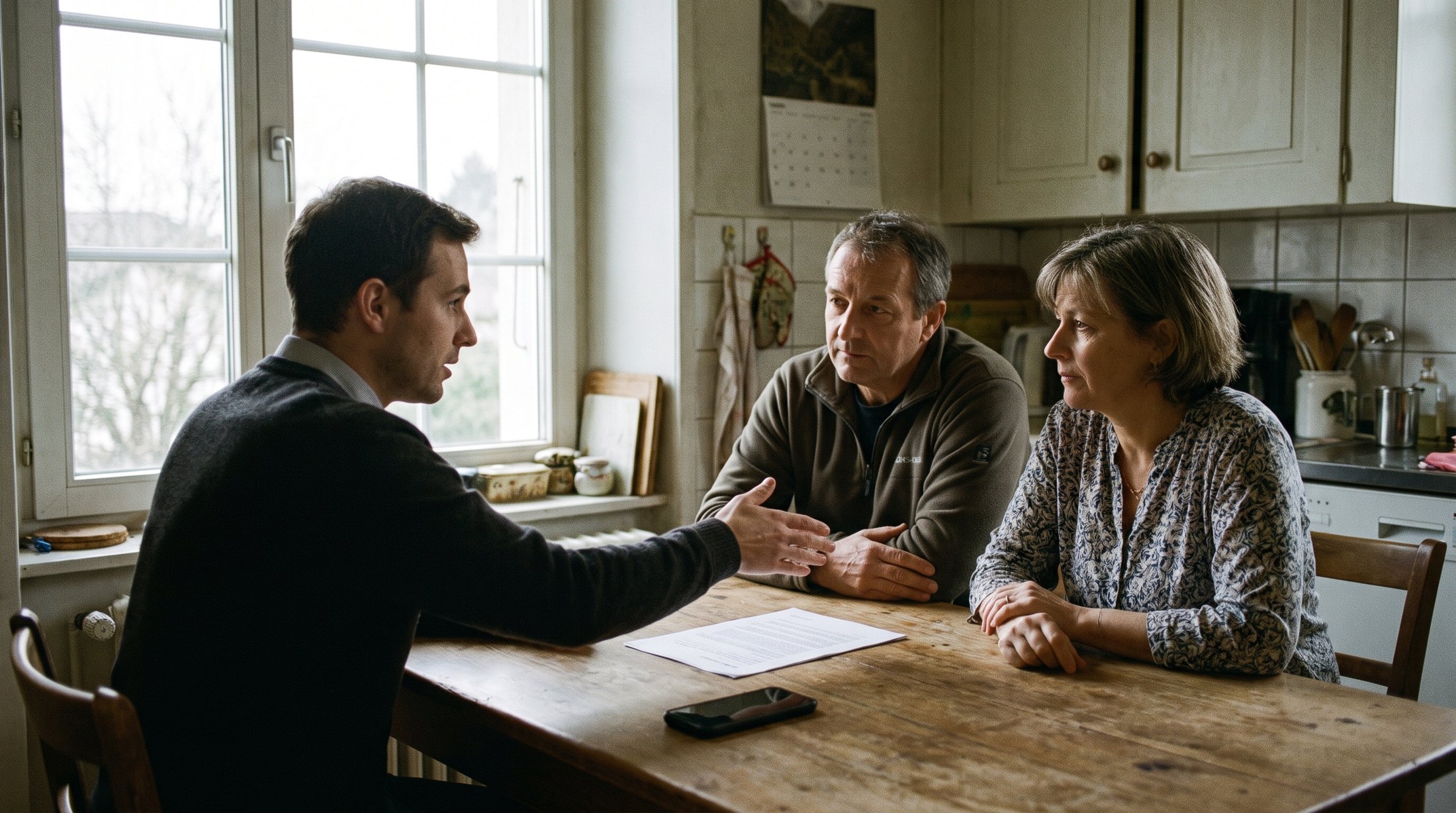
The question comes up in every project: are you allowed to record a client meeting in Switzerland? Yes, with the agreement of the participants. What surprises people is not the answer, it is where the answer is written. It sits in the Criminal Code rather than in data protection law. That difference changes how you organise, not whether you can.
The text, in full
Article 179ter of the Swiss Criminal Code is headed “unauthorised recording of conversations”. It targets the person who is taking part in the conversation:
Any person who, without the consent of the other participants, records on a sound carrier a non-public conversation in which they were taking part, any person who stores a recording that they knew or had to assume was unlawful in the sense described above, or who exploits it, or makes it accessible to a third party, is liable, on complaint, to a custodial sentence of up to one year or to a monetary penalty.
Three useful readings. This is a criminal provision, so it is dealt with up front, in the design of the setup, rather than in an impact assessment written after the fact. It also covers storage and use, not only capture, which simply means the chain has to be clean end to end. And it only bites on complaint, which is why it often goes unnoticed.
What “non-public conversation” covers
A sales meeting in a private home, in a director's office, in a closed showroom or in a meeting room is a non-public conversation. The test is not the place but the reasonable expectation of the participants: the conversation is not meant to be heard by an undefined circle of people.
The agreement has to come from every participant, not from a majority. In a home energy retrofit meeting where both partners are present, two agreements are needed. If an adult child or a neighbour comes into the room and joins the exchange, a third. In practice the request is made once, out loud, once everyone is seated.
The art. 179quinquies exception
Art. 179quinquies provides for recordings that are not punishable. It is sometimes invoked by analogy, but it covers telephone conversations only, and in two cases: calls with emergency or rescue services, and business conversations about orders, mandates, reservations or other similar transactions.
A face-to-face meeting is not a telephone conversation, and a consultative negotiation is not order taking. The exception therefore does not apply to in-person selling. What replaces it is simpler than it is: the agreement of the participants.
What to take away
The rule is met in full, and easily: the agreement of each participant, asked for out loud at the start of the meeting, timestamped and stored with the recording. A product that does this properly takes the subject off the table, and the rep in the field has nothing left to remember.
The sales objection, and what the numbers say
Sales leaders always have the same fear: asking for permission will break the meeting. Figures published by the US vendors in this market, across tens of thousands of conversations, put the refusal rate among private customers below half a percent. The European market is more sensitive and the figure will be higher here, without being of a different order of magnitude.
In practice the request often turns into an advantage. It marks out a professional who keeps a record of what they promise. In sectors where the dispute turns precisely on what was said in the meeting, the recording protects both sides, and that is easy to say to a customer.
What solid consent looks like
A box ticked in terms and conditions signed online three weeks earlier says nothing about what happened in the living room. What holds up, and what the logic of the text calls for, is more concrete:
- A spoken request, made at the start of the meeting, in the customer's language.
- One agreement per participant, not a single agreement covering the household or the company.
- A timestamp, stored with the recording and not in a separate system.
- The exact version of the notice read out to the customer, archived with the agreement.
- A refusal that blocks capture technically, rather than a box that can be ignored.
- An export of the consent file, available without going through the vendor.
The GDPR and the FADP add to this, they do not replace it
One confusion comes back regularly: assuming that lawful processing under the GDPR or under the Federal Act on Data Protection settles the question. These are two separate and cumulative regimes. A well documented legitimate interest under art. 6.1.f GDPR does not replace the agreement required by art. 179ter CP.
The reverse is true as well: collecting the agreement does not remove the data protection obligations, purpose, proportionality, retention period, rights of the individuals concerned, information. The two are handled together, once, at setup.
What this asks of a tool
What matters plays out in the product rather than in the contract. Capture of the agreement has to be locked in ahead of recording, per participant, timestamped, versioned and exportable. When that is the case, the sales team has nothing to memorise and nothing to weigh up in the field, and the legal department has its file without having to ask for it.
That is the design principle behind MIHOS: no agreement, no recording, and the proof of agreement is part of the file in the same way as the transcript.
Sources
Swiss Criminal Code (SR 311.0), art. 179ter and art. 179quinquies para. 1. Federal Data Protection and Information Commissioner, information sheets on the recording of conversations. Federal Act on Data Protection (SR 235.1). Regulation (EU) 2016/679, art. 6 para. 1 point f. This article sets out the state of the law at its publication date and is not legal advice.
Read next